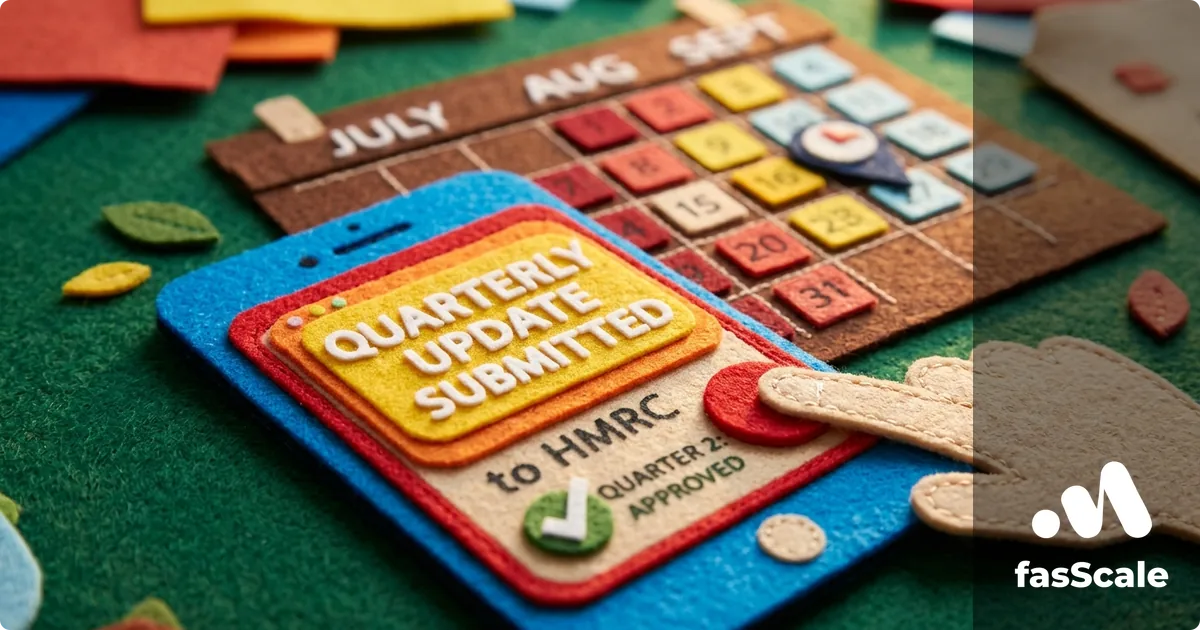
Making Tax Digital for Income Tax has been pushed back four times since it was first announced. It is, finally, real. From 6 April 2026, sole traders and landlords with qualifying income over £50,000 must keep digital records and submit quarterly updates to HMRC. The threshold drops to £30,000 in April 2027 and £20,000 in April 2028 – so even if you’re not in scope this year, you’re in scope soon. This guide walks through what changes, what doesn’t, and what you actually need to do.
What MTD for ITSA actually is
Making Tax Digital for Income Tax Self Assessment (MTD for ITSA) replaces the annual Self Assessment for sole traders and landlords with a year-round process: digital records kept in MTD-compatible software, plus four quarterly updates to HMRC and an end-of-year final declaration. It is not a new tax. It is a new way of working with the existing tax. The amount you owe is unchanged.
Who’s in scope (and when)
Three thresholds matter, each applying from 6 April of the relevant year. April 2026: gross qualifying income over £50,000. April 2027: gross qualifying income over £30,000. April 2028: gross qualifying income over £20,000. Below £20,000 there is no current mandation. Limited companies are not affected by MTD for ITSA – they pay Corporation Tax, not Income Tax.
What “qualifying income” means
Qualifying income is the combined gross self-employment turnover and gross property income (i.e. before expenses). It does notinclude salary, dividends, pension income, or savings interest. The threshold is checked against the previous tax year’s submitted return. So whether you’re in scope from 6 April 2026 is decided by what you reported for 2024/25.
What you have to do under MTD
Four mandatory steps. Keep digital records of income and expenses in MTD-compatible software. Submit quarterly updates by the deadlines: 7 August (Q1), 7 November (Q2), 7 February (Q3), 7 May (Q4). Submit a final declarationby 31 January after the tax year ends; this replaces the old Self Assessment return. Pay any tax due by 31 January – the same deadline as today.
What hasn’t changed
The amount of tax you pay is unchanged – allowable expenses, Personal Allowance, tax bands, NIC rates are all governed by Income Tax law, not MTD. The Self Assessment payments-on-account schedule (31 January and 31 July) is unchanged. Trading allowance, property allowance, all the existing reliefs – unchanged.
Software requirements
HMRC publishes an approved list of MTD-compatible software. Most accounting tools – FasCash, FreeAgent, Xero, QuickBooks, Sage – are MTD-ready. Spreadsheets are allowed only with bridging software that submits to HMRC. A bare spreadsheet won’t do. Direct submissions from a spreadsheet without bridging software are not permitted under the rules. For most sole traders, moving directly to MTD-compatible accounting software is simpler than the spreadsheet-plus-bridging route.
How to get ready (3-month plan)
Three months gives you a calm transition. Month 1:choose and set up MTD-compatible software, set up bank feeds, configure your business in the system. Month 2: import or enter historical figures so the quarterly cycle starts clean (you can usually backfill the current tax year). Month 3: do a mock quarter – submit a draft update internally to test the process and catch any data gaps. Open the MTD signup with HMRC at least 5 working days before your first quarterly deadline.
What happens if you miss a quarterly deadline
During the first year (2026/27), HMRC has signalled a “soft landing” with no penalties for genuine errors. After that, late filing of quarterly updates triggers points-based penalties similar to the new VAT system: points accumulate to a £200 penalty threshold; reset after 24 months of compliance. Late payment of tax carries the existing interest and surcharge regime.
Common myths
“It means I pay tax quarterly.” No. The tax payment schedule is unchanged.
“I need to know my profit at every quarter end.”No. The quarterly update is summary income/expense figures, not a profit calculation.
“I have to use specific software.” No. Any MTD-compatible tool from HMRC’s approved list works.
“I can keep doing my own books on a spreadsheet.”Only with bridging software that pushes the data to HMRC in the required digital format.
Frequently asked questions
The questions UK sole traders ask most often about Making Tax Digital.
My income is just under £50,000. Will I be caught by MTD in April 2026?
No, not in April 2026. The threshold is gross qualifying income (turnover from self-employment + gross property income) over £50,000 for the prior tax year. From April 2027 the threshold drops to £30,000, so you'd come into scope then if your income remains at this level. Plan for April 2027.
I'm a sole trader AND a landlord. Do both income streams get added together?
Yes. Qualifying income is the combined gross from self-employment and property. £30,000 from self-employment plus £25,000 in rent is £55,000 total — over the April 2026 threshold.
Will MTD increase my tax bill?
No. MTD changes record-keeping and reporting; it doesn't change tax law. Your allowable expenses, your tax rates, and your reliefs are all unchanged. The only direct cost is the software (typically £10-£25/month).
I use a spreadsheet for my accounts. Can I keep doing that under MTD?
Only if you also use 'bridging software' that takes data from your spreadsheet and submits it to HMRC in the required digital format. A bare spreadsheet alone won't satisfy MTD. The simpler route is moving to MTD-compatible accounting software directly.
What if I have multiple businesses?
Each business reports separately under MTD, with its own quarterly updates. Combined income still counts towards the threshold. Be aware that 'income from a business' is defined per HMRC guidance — multiple distinct trades may need separate quarterly returns.
Are limited companies affected by MTD for ITSA?
No. Companies pay Corporation Tax, not Income Tax, and aren't in scope of MTD for ITSA. There's a separate 'MTD for Corporation Tax' programme under consultation, but no mandation date has been set as of 2026.
When does the first MTD quarterly update become due?
For the 2026/27 tax year, the first quarter runs 6 April to 5 July 2026. The quarterly update is due by 7 August 2026 (one month and 2 days after quarter-end).
Can I appeal if I think the £50,000 threshold has been wrongly applied?
Yes. HMRC publishes a notification telling you you're in scope; you can appeal if you believe your qualifying income was below the threshold. Keep evidence (bank statements, invoices) to support the appeal. Appeals are usually heard quickly.