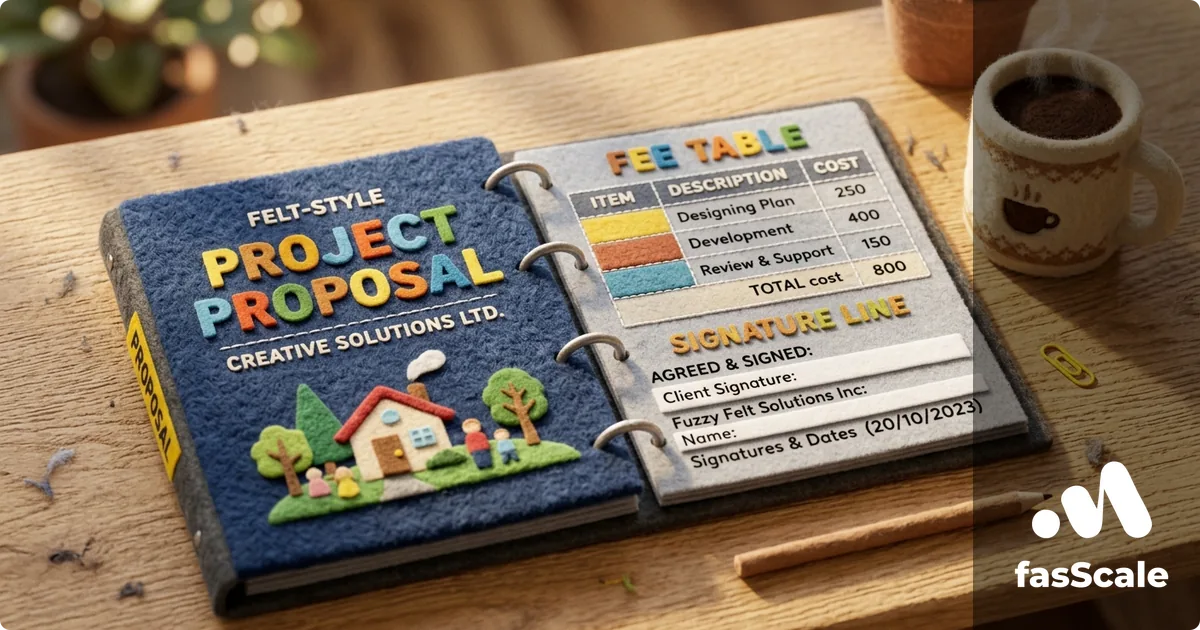
A proposal isn’t a brochure. It’s a business case for hiring you over the alternative. The best proposal I’ve ever sent was three pages long. The worst was thirty. The difference wasn’t writing skill – it was understanding what the client was actually buying and ruthlessly removing everything that wasn’t that. This guide walks through the structure that wins, the pricing approach that closes deals, and the follow-up that doesn’t get you blocked.
What a proposal actually needs to do
A good proposal does four things, in this order: it wins the work; it reduces the buyer’s perceived risk of choosing you; it makes the next step (signing, paying) frictionless; and it’s skim-readable, because most proposals are read in 90 seconds the first time. Everything in the document earns its place by serving one of those jobs. If a paragraph doesn’t, it’s padding, and padding actively hurts you – the longer the document, the harder it is for the buyer to find the answer to the question they actually have.
This is the single biggest reframe for most founders writing their first few proposals. You’re not pitching yourself. You’re removing reasons to say no.
Buyers don’t read proposals start to finish. They scan the cover, read the price, scan the next-steps section, and then – if those three pass the smell test – they go back and read the bits that matter to them: the problem statement, the approach, and one or two sections relevant to whatever they’re nervous about. Write so each section earns a re-read on its own; don’t structure as if every reader will land at the cover and read linearly.
The other reframe worth holding onto: a proposal isn’t the start of the conversation. By the time it lands, the buyer has already half-decided whether they want to work with you, from the discovery call. The proposal’s job is to make saying yes easy, not to convince a sceptic from cold. If you’re writing proposals to people you’ve barely spoken to, the fix isn’t a better proposal – it’s more discovery before you write.
The structure that wins
A six-section structure works for almost every B2B engagement. Adapt the lengths to the size of the deal; keep the order.
- The problem – stated in the client’s words, not yours. If they don’t recognise their problem in the opening paragraph, you’ve already lost.
- Your solution – specific, named, scoped. No “we offer a range of services” – this proposal is for one engagement, with one scope.
- Approach – how you’ll execute, with named milestones and dates. Make the work look like a path, not a black box.
- Team or relevant credentials – brief. One paragraph for you, one for any subcontractor, two or three specific examples that match the buyer’s situation.
- Investment – price, terms, payment. Not hidden, not on a separate document, not by request. On the page.
- Next steps – one clear action. Sign here. Click here to schedule. Reply with go-ahead. One.
For a £5k engagement, this is two or three pages total. For a £50k engagement, five to seven. The proposal doesn’t need to expand because the deal is bigger – it expands because the risk is bigger and the buyer needs more reassurance per section.
Discovery before drafting
A proposal written without proper discovery is mostly guesswork. Five questions you should be able to answer before you start drafting:
- What does success look like to them in six months?
- What have they tried before, and why didn’t it work?
- Who else is involved in the decision?
- What’s their budget range?
- What’s their timeline?
All five are uncomfortable to ask the first time. All five raise your hit rate enormously. The budget question in particular tends to feel rude in British conversation, but most buyers answer if you frame it well: “before I write this up, I want to make sure I’m proposing something that fits – roughly what range are you thinking?” gets you a useful answer about 70% of the time, and lets you walk away from something that’s never going to close anyway.
Pricing – show your working
Two strong patterns in B2B proposals. The first is to show the buyer what they’re paying for: a short table that breaks the price into the work behind it. Buyers feel less anxious about a price they understand. The second is the three-tier approach – essential, standard, premium, or some equivalent – which anchors price perception and gives the buyer something to choose between rather than something to accept or reject. Most buyers pick the middle option, which is usually where you want them.
Always include payment terms (50% upfront and 50% on delivery is a common starting point; monthly retainer for ongoing work). Always include the VAT line if you’re VAT-registered – never quote a number that’s ambiguous about whether VAT is included. The standard VAT rate is 20%; the registration threshold is £90,000 of taxable turnover on a rolling 12-month basis. If you’re not VAT-registered yet, say so on the price line so the buyer knows what to expect when you cross the threshold.
Common proposal mistakes
Generic boilerplate. If three sentences could be in any proposal you’ve ever written, the buyer can tell.
Too long. Over five pages on anything under a five-figure deal is almost always padding.
Hiding the price. Forces the buyer to ask, which creates friction and signals that you’re uncomfortable with the number. If you’re uncomfortable with it, fix it – don’t hide it.
Talking too much about you. The proposal is about them. Your section is brief and relevant; everything else is about their problem and your solution to it.
No clear next step. A proposal that ends “let me know your thoughts” doesn’t close. End with the specific action you want them to take, with the friction removed.
Sending as an editable Word document. Looks unprofessional and invites edits you didn’t agree to. Send a PDF, ideally with an e-signature link.
Following up without being annoying
A simple cadence that closes deals without burning the relationship: day 0, send the proposal with a short covering note (“here’s the proposal we discussed – happy to walk you through it whenever suits”); day 3, brief check-in (“any questions on the proposal?”); day 7, substantive follow-up (“I realised I didn’t address X – here’s a quick clarification”); day 14, respectful close (“if now isn’t the right time, no worries – just let me know if I should follow up in Q3”). After day 14, drop into normal nurture cadence: once a month, no more, with something useful in each touch.
Two things to avoid. Don’t follow up more than once a week unless they’ve asked you to. And don’t send passive-aggressive bumps (“just bumping this”, “I’ll close the file”) – they corrode trust without speeding the decision.
Templates and tools
A few well-built templates you tweak per client beats a fresh proposal every time. Sections that template well: introduction, approach, team, terms and conditions, payment terms, contact details. Sections you customise per client: the problem statement, the solution, the pricing, the timeline. The split speeds up production without making the document feel off-the-shelf.
Software like FasScale Proposals takes the template approach further: version-controlled sections, e-signature, and tracking so you know exactly when the buyer opened the document and which sections held their attention. The version-control side is more useful than it sounds – when you’ve sent the same proposal three times to a buyer who keeps asking for tweaks, knowing which version is on the table avoids a great deal of back-and-forth.
When to walk away from a proposal
Five signals that the deal isn’t worth the proposal you’d need to write to win it. The buyer wants the work free or for “exposure”. They’re shopping price across five or more providers (race-to-bottom signal). The brief keeps changing in unhelpful ways. The decision-maker hasn’t been on a call. Your gut says no. The first four are easy to assess; the fifth is harder, but it’s usually right. Most founders look back on bad client engagements and realise the warning signs were there in the first conversation – the proposal was just where the discomfort got written down.
Walking away well matters more than walking away fast. A clean, warm decline keeps the door open: “I don’t think we’re the best fit for this one – it sounds like you’d be better served by [type of provider], and here’s a name if it’s useful. If something else comes up that needs [your speciality], drop me a line.’’ People remember the providers who turned them down gracefully; roughly one in three of those introductions comes back with a different brief six months later. The expensive version is saying yes to a bad fit, doing the work badly because it was never the right work, and burning the relationship at the end.
One more pattern worth flagging: the “learning” argument. Junior founders especially talk themselves into bad proposals on the basis that they’ll “learn from it”. The learning is usually free – attend the discovery call, take notes, write a private post-mortem. You don’t need to commit to the engagement to learn how that kind of buyer thinks. Walk away with the notes; spend the time you’d have spent on the bad project finding a better one.
Frequently asked questions
The questions founders ask most often when they’re tightening up their proposal process.
How long should a business proposal be?
As long as needed and no longer. For a £5k engagement, 2-3 pages. For a £50k consulting contract, 5-7 pages. For a £500k project, 15-20 pages. Length should track risk and complexity, not impress. Most proposals fail not from being too short but from padding.
Should I send a proposal as a PDF or a Word document?
PDF, almost always. PDFs look professional, can't be edited accidentally (or maliciously), and render the same on every device. Word documents signal “this is a draft” and invite haggling. The exception: if the client specifically asked for an editable version because their procurement process needs it.
Should I include my hourly rate or a fixed price?
Fixed price wherever you can. Buyers prefer it (no surprises) and it forces you to scope properly upfront. Hourly works for genuinely undefined scope (discovery, support retainer) but on bigger jobs introduces budget anxiety on both sides.
Should I send a proposal to someone who hasn't asked for one?
Generally no, unless you've had a substantive conversation about a specific opportunity. Cold proposals get filed under “ignore”. A short outreach email asking if they'd find a proposal useful gets better engagement than the proposal itself.
What's the typical hit rate on proposals?
For warm leads (existing relationship or referral), 40-60% is realistic. For cold inbound where you're competing, 15-25%. Below 15% means you're either being shopped against people who don't really compete with you, or your discovery is too thin and you're proposing to people who weren't going to buy.
Should I include client testimonials in a proposal?
One or two relevant testimonials yes – relevant to this client's industry or problem. Five generic ones, no. Better still, link to a separate case study page so they can dig deeper if they want.
How do I price when I don't know what the market rate is?
Three tactics: (a) ask the prospect what they've budgeted (you'd be amazed how often they tell you); (b) price based on the value to them, not your hours (a project that saves them £50k/year can support a price of £15-20k easily); (c) start at the price you'd be slightly uncomfortable charging – that's usually closer to right than your “safe” number.
How quickly should I send a proposal after the initial conversation?
Within 48-72 hours while the conversation is fresh and your competitor (if any) hasn't yet sent theirs. Sending a week later signals you're not that interested or you're disorganised. If you genuinely need longer for a complex proposal, send a brief acknowledgement email with the timeline (“expect this by Thursday”).